Koo Yun-cheol: "If oil prices rise to $120–$130, it enters Stage 3 Crisis... Considering vehicle 5-day rotation system for private vehicles"
Deputy Prime Minister and Minister of Economy and Finance Koo Yun-cheol stated that if international oil prices surge to $120–$130 per barrel…
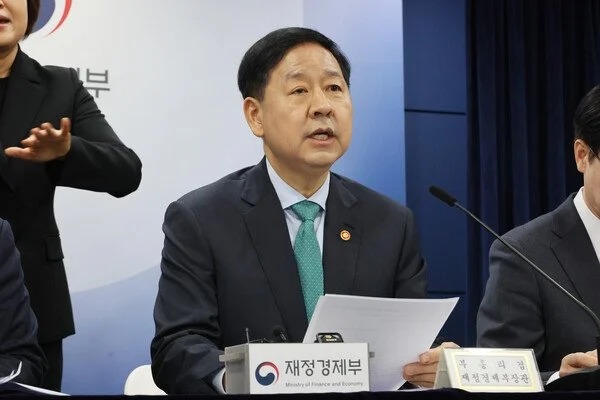
[Field News = Reporter Tae Gi-won] Deputy Prime Minister and Minister of Economy and Finance Koo Yun-cheol stated on the 29th that if international oil prices soar to the $120–$130 per barrel range, the government may expand the vehicle 5-day rotation system to the private sector.
Appearing on KBS 'Sunday Diagnosis' that morning, Koo said, “If the situation becomes more serious, it must rise to Stage 3 (Alert),” and added, “I believe we may need to introduce a rotation system to ask for the cooperation of the public in the private sector as well.”
He predicted that if it is upgraded to Stage 3, “(Crude oil) market prices will rise much more, and by that point, consumption must also be reduced.” He noted that while the government is currently requesting voluntary participation in the vehicle 5-day rotation system from the private sector, it could be converted into a mandatory measure if the surge in oil prices continues.
Regarding the criteria for upgrading to Stage 3, he said the government would comprehensively assess the severity of the crisis rather than relying on a single indicator.
Koo said, “Oil prices are currently fluctuating between $100 and $110, but if they go to $120–$130, we will look at various comprehensive situations.” This implies that the decision will be made by considering not only oil price levels but also the international situation, domestic supply and demand, inflation, and the burden on people's livelihoods.
As for government countermeasures, the possibility of additional fuel tax cuts was left open. Regarding concerns over the shortage of naphtha, which is essential for the production of industrial goods, he mentioned measures to secure alternative import sources and adjust priorities by usage field. As a mid-to-long-term measure for responding to the energy crisis, he introduced the government's plan to increase nuclear power plant operation rates and accelerate the transition to renewable energy such as solar and wind power.
To respond to the increasing impact on the livelihood economy due to the aftermath of the Middle East war, he also revealed the outline of a supplementary budget of approximately 25 trillion won being prepared by the government. Koo explained that this supplementary budget will focus on four major areas: responding to high oil prices, supporting livelihoods (small business owners, self-employed, logistics, delivery workers, and youth), industrial support, and stabilizing supply chains.
Regarding the method of raising funds, he drew a line at the possibility of issuing government bonds. He added, “It is being done with the expected excess tax revenue, not by taking on debt at all,” and noted that according to Bank of Korea analysis, it is not at a level that would significantly stimulate inflation.
Regarding the recent surge in the KRW/USD exchange rate past 1,500 won, he said, “Korea's foreign exchange reserves exceed $420 billion, and net external assets are at the $900 billion level,” and “The situation that the public is worried about will not occur.”
Regarding the real estate market, he drew a line against speculations that an increase in holding taxes will be included in the July tax reform plan, stating, “We are still listening to various opinions, so nothing has been decided.”
Regarding President Lee Jae-myung's recent sharing of an article on social media comparing holding taxes in major cities to Seoul, he explained, “I understand his intention to be that expanding housing supply and financial innovation are priorities, and if various measures fail, we might ultimately look at real estate taxation.”
He also expressed the intention to promote tax expenditure reform during the July tax law revision. Koo said, “Regarding chronic tax expenditures, in principle, we should abolish those that can be abolished during this opportunity.”
0Comments