Korea-U.S. Conclude Tariff Negotiations: $200 Billion Cash Investment in U.S., Annual Cap of $20 Billion
South Korea and the United States have agreed on a $350 billion investment and tariff package…
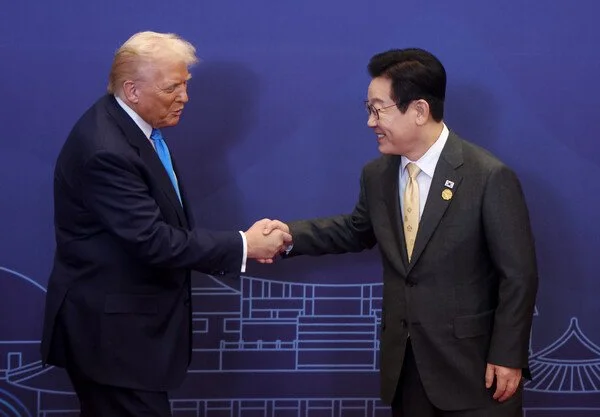
[Field News = Reporter Tae Gi-won] South Korea and the United States agreed on the 29th to a total of $350 billion in investment and tariff packages for the U.S., of which $200 billion will be invested in cash with an annual limit of $20 billion.
Kim Yong-beom, Senior Secretary to the President for Policy, announced the results of the agreement during a briefing on that day.
Kim explained, "The $350 billion in financial investment in the U.S. consists of $200 billion in cash and $150 billion in shipbuilding cooperation."
The structure is similar to Japan's $550 billion financial package, but South Korea has set an annual investment cap of $20 billion to stabilize the foreign exchange market.
Investments will be made in installments according to business progress within the annual limit.
Kim explained, "Since we invest according to the degree of business progress within the annual limit of $20 billion, it remains within the range that our foreign exchange market can endure, and the impact on the market can be minimized."
The $150 billion in shipbuilding cooperation, named the 'MASGA Project,' will be driven by South Korean companies and was agreed to include guarantees in addition to investments.
According to this agreement, U.S. tariffs on South Korean automobiles will be reduced from 25% to 15%. Reciprocal tariffs are already being applied at 15% following the agreement at the end of last July.
Regarding item-specific tariffs, items such as pharmaceuticals and timber will receive Most-Favored-Nation (MFN) treatment. Zero tariffs will be applied to aircraft parts, generic drugs, and natural resources not produced within the United States.
Semiconductors were settled at a tariff level that is not disadvantageous compared to Taiwan, the main competitor.
Additional opening of the agricultural sector, including rice and beef, was prevented.
Measures to prepare for foreign exchange market volatility were also included.
Regarding this agreement, Kim explained, "We have also established separate grounds to request adjustments in the timing and amount of payments if concerns about foreign exchange market instability arise," and "While the investment commitment is until January 2029, the actual procurement will take place over a long period, and since it will be procured through methods other than market purchases, the impact on the foreign exchange market will be further mitigated."
He also stated, "Multi-layered safety measures have been prepared to increase the possibility of principal recovery," and "It was agreed to proceed only with projects that have commercial rationality where principal and interest are guaranteed, and this will be specified in a Memorandum of Understanding (MOU)."
He added, "Until the principal and interest are repaid, profits between Korea and the U.S. will be distributed 50:50, but if it appears that the principal and interest will not be fully repaid within 20 years, the profit distribution ratio can also be adjusted."
0Comments